

Weapons Attorney in Syracuse, NY
Message Your Team
IN THE NEWS






Weapon Crime Defense Attorneys Who Used to Prosecute Gun Cases
A gun arrest in Syracuse moves fast. Police often take the case straight to the Onondaga County District Attorney’s Office for a felony complaint, and many gun charges carry a mandatory prison minimum. The decisions made in the first days, including what you say, whether bail is set, and whether evidence gets challenged, can shape the whole case.
Our weapons attorneys know how these cases are built because they used to build them. Scott A. Brenneck prosecuted weapons, assault, burglary and robbery cases in the Onondaga County DA’s Felony Trial Unit. Joe Centra handled drug and weapons cases in the DA’s Narcotics Bureau. Melissa K. Swartz has won reversals in the Fourth Department and the Court of Appeals, including the reversal of a criminal possession of a weapon in the second degree conviction and dismissal of the indictment.
Whether police found a handgun in a car on a traffic stop, a rifle in a home search, or a knife during a street encounter, we look first at the stop, the search and the proof of possession. That is where many gun cases are won or lost.

Arrested on a gun charge in Syracuse? Do these three things now
01
Stay silent and ask for a lawyer.
You have the right to remain silent and the right to counsel. Do not explain where the gun came from, who owns it, or why it was in the car. Those statements are often the strongest evidence of “possession.” (Read more: why speaking to police without a lawyer is risky.)
02
03
Call a weapons attorney before arraignment.
Bail, release conditions and an order to surrender other firearms are often decided at the first court date. Call 315-424-8326. (See also: what to do after a criminal arrest in Syracuse.)
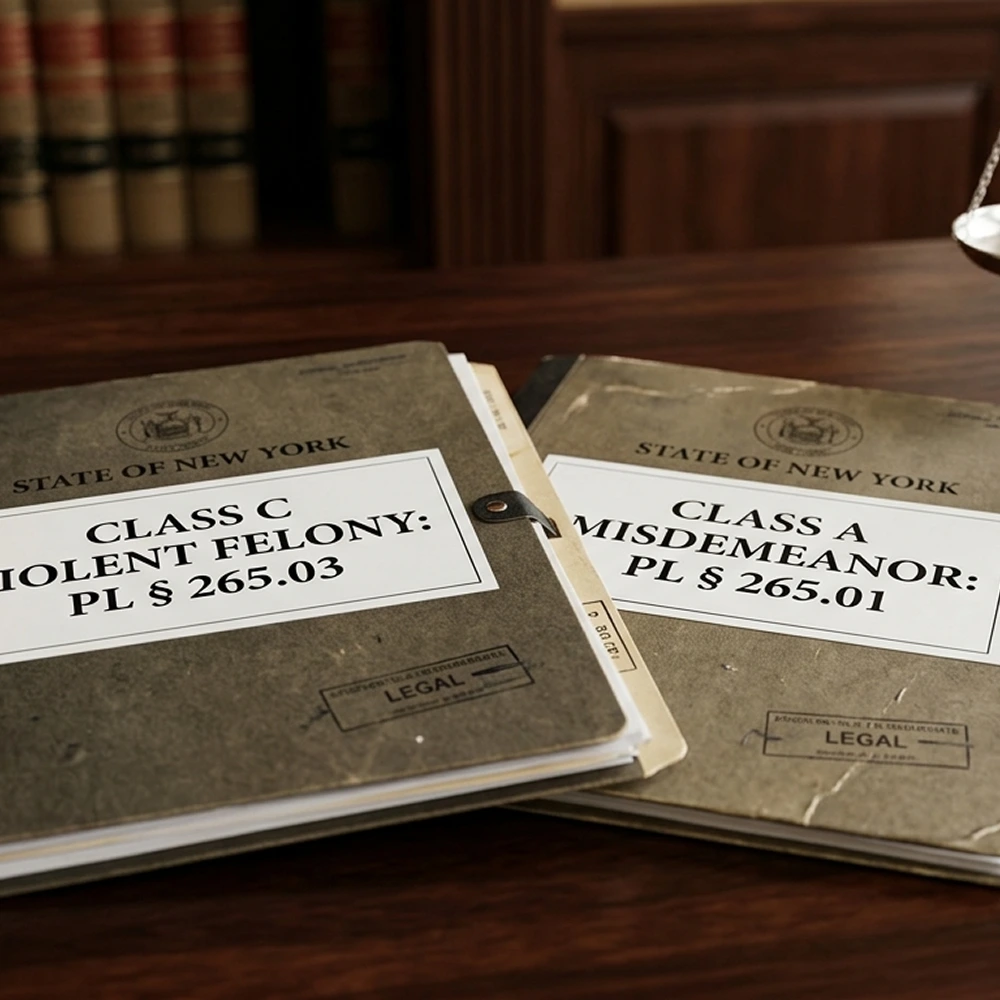
Is a gun charge a felony in New York?
Can I be charged for a gun that wasn't on me?
Out-of-state gun owners: your permit does not travel
Will I lose my pistol permit after an arrest?
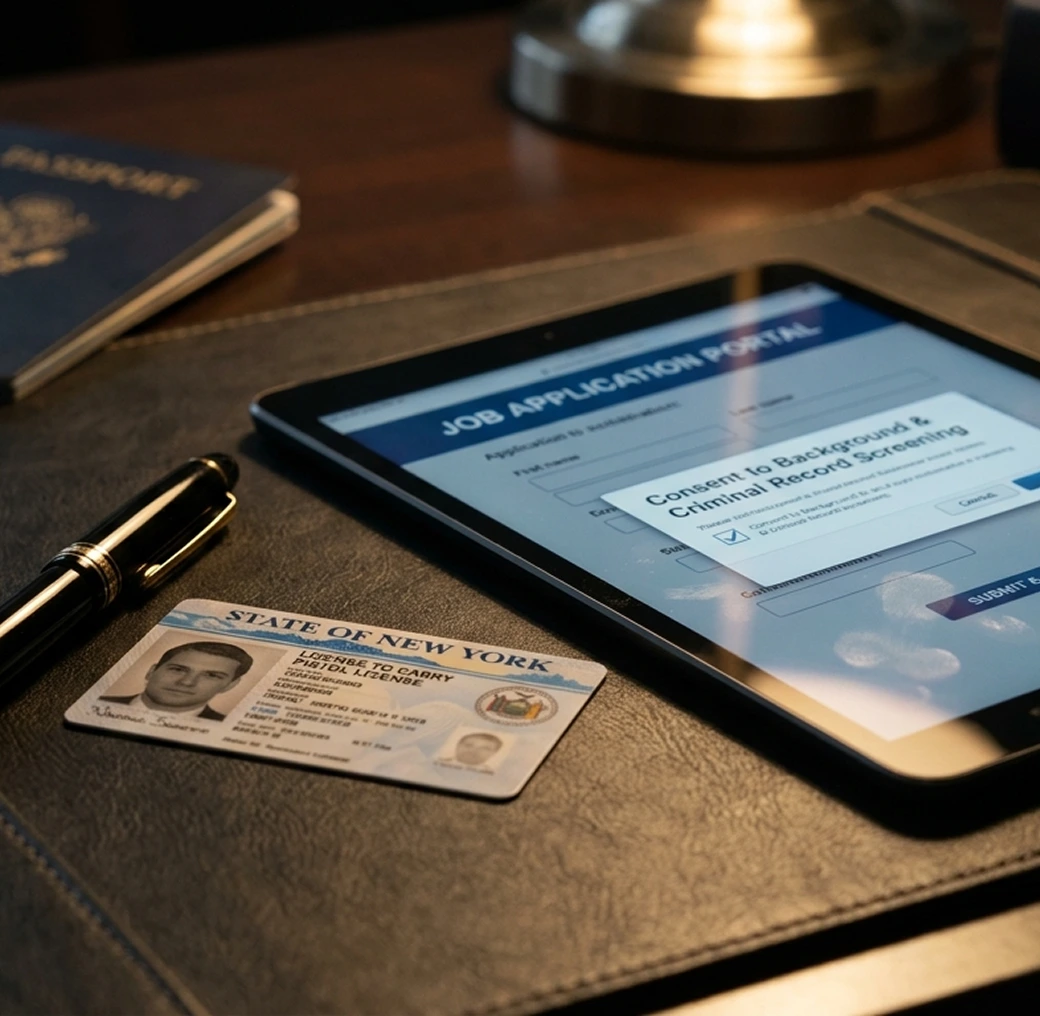
Possibly. A licensing officer can suspend or revoke a New York pistol license after an arrest or an order of protection, and you may be ordered to surrender your guns. Handling the criminal case well is often the best way to protect the license. If you are facing a red flag order instead of a criminal charge, see our ERPO (red flag) defense page.
How Our Gun Charge Lawyers Fight Weapons Cases
The stop. Did police have a legal reason to stop the car or approach you? New York’s People v. De Bour levels limit what officers may do at each step.
The search. Was there a valid warrant, valid consent, or a real exception? If not, we move to suppress the gun under CPL §710.20.
Possession. Did you know the gun was there, and could you control it? Being near a gun is not the same as possessing it.
The car presumption. PL §265.15(3) has exceptions, and a jury does not have to accept it.
Operability and “loaded.” The prosecution must prove the gun works. “Loaded” has a legal definition that we check against the evidence (PL §265.00(15)).
Home or business exception. A loaded gun kept in your own home or place of business is generally not CPW 2nd under §265.03(3).
License and exemption status. Licenses, antique-firearm rules and legal exemptions can defeat or reduce a charge.
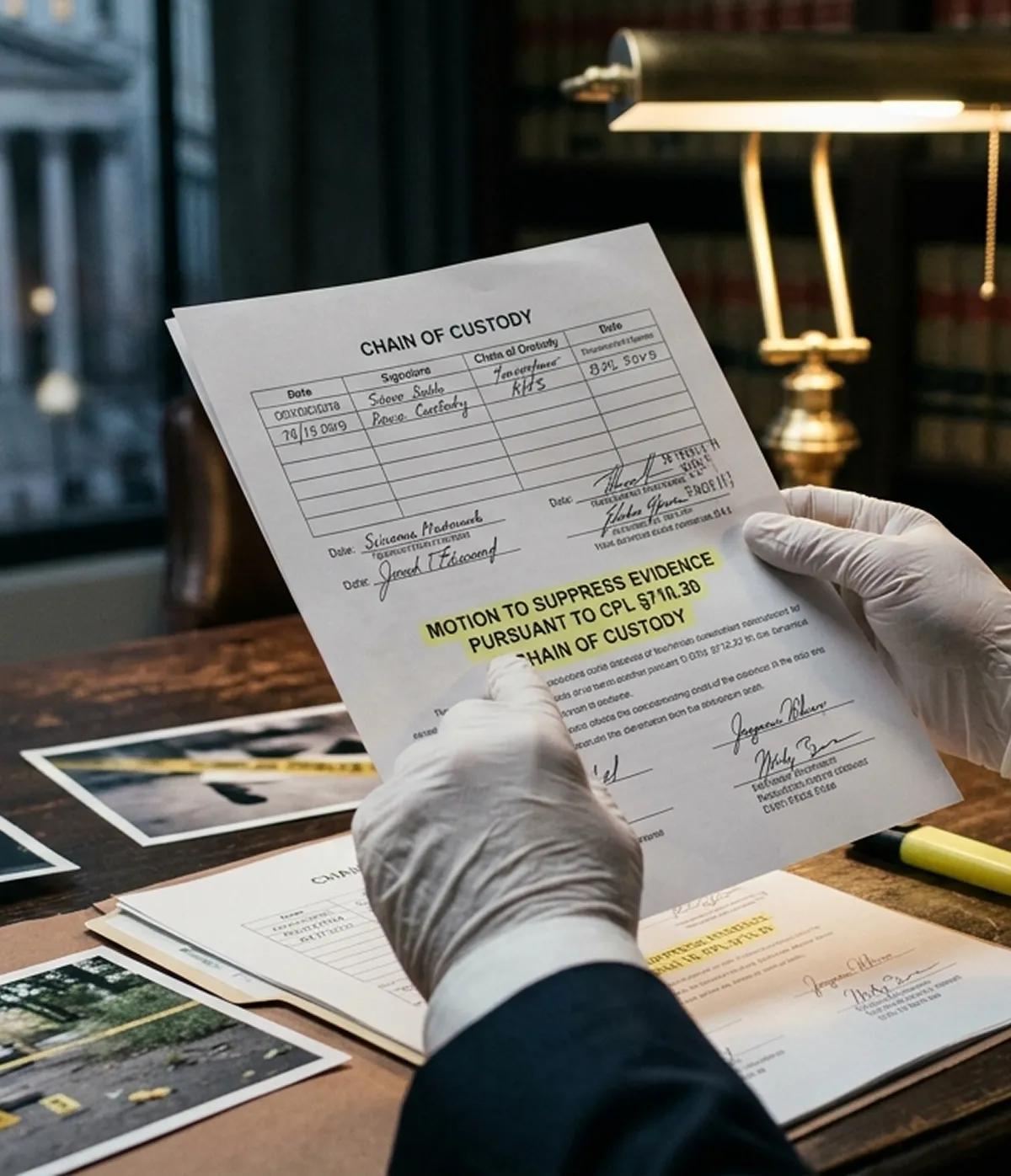
Statements and lab work. We challenge statements taken without proper Miranda warnings and test DNA, fingerprint and chain-of-custody evidence.
Gun Charge Penalties in New York
These are the main New York weapon offenses and the sentences the law allows for a first offense.
| Offense | Statute | Class | Possible sentence (first offense) |
|---|---|---|---|
| Criminal possession of a weapon, 4th degree | PL §265.01 | A misdemeanor | Up to 364 days in jail, probation, fine up to $1,000 |
| Criminal possession of a firearm | PL §265.01-b | E felony | Up to 1⅓–4 years in prison; probation possible |
| Criminal possession of a weapon on school grounds | PL §265.01-a | E felony | Up to 1⅓–4 years; probation possible |
| Criminal possession of a weapon in a sensitive location | PL §265.01-e | E felony | Up to 1⅓–4 years; probation possible |
| Criminal possession of a weapon, 3rd degree | PL §265.02 | D violent felony | 2 to 7 years determinate prison; some cases allow a lesser sentence |
| Criminal possession of a weapon, 2nd degree | PL §265.03 | C violent felony | 3½ to 15 years determinate prison; narrow exceptions |
| Criminal possession of a weapon, 1st degree | PL §265.04 | B violent felony | 5 to 25 years determinate prison |
| Criminal use of a firearm, 2nd degree | PL §265.08 | C violent felony | 3½ to 15 years |
| Criminal use of a firearm, 1st degree | PL §265.09 | B violent felony | 5 to 25 years, plus an added consecutive term in some cases |
| Criminal sale of a firearm, 3rd degree | PL §265.11 | D violent felony | 2 to 7 years |
Prison sentences for violent felonies are followed by post-release supervision (PL §70.45). Felony fines can reach $5,000 (PL §80.00). A prior conviction raises every range. This table is general information, not legal advice about your case.
Criminal Possession of a Weapon Charges We Defend
Most gun cases in Syracuse are charged under Article 265 of the New York Penal Law. Here is what each charge means in plain English.
Criminal possession of a weapon in the fourth degree (PL §265.01)
Criminal possession of a firearm (PL §265.01-b)
Criminal possession of a weapon in the third degree (PL §265.02)
Criminal possession of a weapon in the second degree (PL §265.03)
The most common serious gun charge in Syracuse. It is a class C violent felony, usually for a loaded firearm outside your home or place of business, or a loaded gun possessed with intent to use it unlawfully. It also covers five or more firearms. A conviction usually means state prison, which is why early defense work matters.
Criminal possession of a weapon in the first degree (PL §265.04)
Sensitive places and school grounds (PL §§265.01-a, 265.01-e)
Criminal use and criminal sale of a firearm (PL §§265.08–265.09, 265.11–265.13)
Criminal use applies when a gun is possessed or displayed during a violent felony. Criminal sale covers selling or giving away firearms unlawfully, including trafficking cases. These charges are often added to robbery or assault cases. For the underlying charge, see our felony and misdemeanor defense page.
Assault weapons and large-capacity magazines
Ghost guns and unserialized frames
Guns found with drugs
When police find a gun and drugs together, the prosecution often charges both and argues the gun protected the drugs. We defend the weapon count here and coordinate with our drug possession defense work on the drug count.
Federal gun charges
Some Syracuse gun cases are adopted federally, often as “felon in possession” under 18 U.S.C. §922(g). Those cases go to the Northern District of New York. See our federal criminal defense page.
Facing a red flag order instead?
Facing an Extreme Risk Protection Order rather than a criminal charge? See our ERPO defense page
How a Gun Case Moves Through Syracuse Courts
Most weapon cases in Onondaga County follow the same path. Knowing it helps you make better decisions at each step.
01
Arrest and booking.
Syracuse Police, the Onondaga County Sheriff’s Office, State Police or a town police department makes the arrest. People are usually booked at the Onondaga County Justice Center, 555 South State Street.
02
03
Preliminary hearing or grand jury.
04
05
06
Motions and hearings.
07
Outside Onondaga County
Consequences Beyond the Sentence
A weapons conviction can follow you long after the case ends:
Lifetime gun ban.
Pistol license.
Sealing limits.
Immigration.
Jobs, housing and licenses.
Students.
College students can face school discipline in addition to the criminal case. See our university discipline and Title IX page.
Young people.
Results From Our Weapons Attorneys
People v. Montgomery
People v. Robles
New York Court of Appeals; suppression error. Confirm which side Melissa represented, the outcome, and that a weapon charge was involved.
More weapons results
MEET THE TEAM
Meet Your Gun Possession Lawyers
Cambareri & Brenneck was founded by, and is made up of, former Onondaga County prosecutors. On a weapons case, that means your defense team has handled gun cases from the other side of the courtroom.

Steve Cambareri
Partner
Former ADA, violent felony trial bureau

Scott A. Brenneck
Partner, Attorney
Appeals and post-conviction; People v. Montgomery

Melissa K. Swartz
Attorney
Appeals and post-conviction; People v. Montgomery

Joe Centra, Esq.
Attorney
Former ADA, Narcotics Bureau: drug and weapons cases

(Ret.) Judge John
Special Counsel
Retired Appellate Division justice, now leading firm mediation.
WHY CHOOSE US
Why Hire a Former Prosecutor as Your Gun Crime Lawyer
Former Onondaga County Prosecutors
Our attorneys prosecuted gun, drug and violent felony cases. Now we use that insight to find the weak points in yours.
Trial and Appeal on One Team
If a case can't be won at trial, our appellate attorneys can take it to the Fourth Department and the Court of Appeals.
Downtown, Steps From the Courts
Our office is at 300 South State Street in downtown Syracuse, close to City Court and County Court.
Free, Confidential Consultation
Call 315-424-8326 or send a message. We'll review your charge and explain your options.
AREAS WE SERVE
Weapons Charge Lawyer for Syracuse & Central New York
Syracuse, NY
Onondaga County towns
Auburn (Cayuga County)
Oswego (Oswego County)
FAQS
Weapons Charge FAQs
How many years can you get for a gun charge in New York?
Is there a mandatory minimum for a gun charge in NY?
Can you get probation for a gun charge in New York?
How much is bail for a gun charge in Syracuse?
How do you beat a gun charge in New York?
What happens if police find a gun in a car with several people?
Does my out-of-state carry permit protect me in New York?
Is criminal possession of a weapon 2nd degree a violent felony?
Can a gun charge be sealed in New York?
Do I need a lawyer for a first-time gun charge?
Reviewed by Scott A. Brenneck, former Onondaga County Assistant District Attorney (Felony Trial Unit). Last updated October 2026.
CONTACT US
Free Confidential Consultation
Attorney Advertising. Sending us a message does not create an attorney-client relationship. Please don’t send confidential details until you’ve spoken with an attorney.
Phone Number
Location