

Child Pornography Defense Attorney in Syracuse, NY
A child pornography defense attorney protects you when police or federal agents accuse you of possessing or sharing illegal images under New York Penal Law Article 263 or federal law. Cambareri & Brenneck, PLLC is a Syracuse, NY criminal defense firm founded by former Onondaga County prosecutors. Call 315-424-8326 for a free, confidential consultation.
Message Your Team
IN THE NEWS






A Child Pornography Lawyer Who Knows How These Cases Are Built
You are presumed innocent. What you do in the next few days matters.
Being accused of a child pornography offense is frightening. Your job, your family and your name all feel at risk before you have even seen the evidence. But an accusation is not a conviction. The prosecution still has to prove every element of the charge, including that you knowingly possessed, viewed or shared the material (PL §§263.11, 263.16).
These cases are built on digital forensics. Investigators seize phones, computers, hard drives and cloud accounts, then search them under a warrant. Many cases start with a tip that an online service provider sends to the National Center for Missing & Exploited Children (NCMEC), which passes it to local or federal investigators. In Central New York, that can mean the State Police, the Onondaga County District Attorney’s Office, the FBI, or Homeland Security Investigations.
Cambareri & Brenneck is made up of former Onondaga County prosecutors. We know how these investigations are run and where they go wrong, because we used to review them from the other side. Melissa K. Swartz leads our work on these cases. She served as trial counsel in the Onondaga County DA’s Office, now defends clients in state and federal court, and serves as the Northern District of New York CJA Panel representative. We keep your case confidential, test every step of the investigation, and fight for the best possible result.
Police or federal agents came with a search warrant. What now?
01
Don’t talk about the case.
Be polite. Say, “I want to speak with a lawyer,” and then stop. Agents often ask “friendly” questions during a search. Your answers about who uses your devices and what you looked at can become the core of the case. (Read: why speaking to police without a lawyer is risky.)
02
Don’t consent to extra searches.
Don’t unlock devices or give passwords unless your lawyer tells you to. A warrant has limits, and consent can erase them.
03
Don’t delete, wipe or hide anything.
Destroying possible evidence is a separate crime and is usually easy to detect (PL §215.40). It also makes a defense much harder.
04
Get a copy of the warrant and the property receipt.
05
Call a child pornography defense attorney the same day.
Many people are not arrested on the day of the search. That window is when a lawyer can do the most. Call 315-424-8326. (See also: what to do after a criminal arrest in Syracuse)
Can I be charged if I didn't know the files were there?
New York requires proof that you knowingly possessed the material, or knowingly accessed it with intent to view it. Federal law also requires knowing possession, receipt or distribution. Shared computers, shared Wi-Fi, other users in the home, malware, automatic downloads and files you never opened can all raise real doubt about knowledge. A forensic review of how and when each file reached the device is often the most important work in the case.
Will my case be in state court or federal court?
It depends on who investigates and who decides to prosecute. State cases are prosecuted by the Onondaga County DA (or the Cayuga or Oswego County DA) under Penal Law Article 263. Federal cases are prosecuted by the U.S. Attorney’s Office for the Northern District of New York under 18 U.S.C. §§2251–2252A. Federal charges often carry mandatory minimum sentences, so the choice of forum can change the outcome dramatically. Early, careful advocacy can sometimes affect that choice. See our federal crimes defense page for how NDNY cases work.
Should I talk to my employer, school or family?
Not about the facts. Anything you say to anyone other than your lawyer can be used as evidence. If you need to take leave or explain an absence, ask us what to say first. If you are a student, your school may open its own discipline case. See our university discipline and Title IX page.
Is my case confidential?
Yes. What you tell your lawyer is protected by attorney-client privilege once you consult with us about representation. We do not discuss your case with anyone without your permission. We also ask courts for protective orders that limit who can see sensitive discovery (CPL §245.70).
How a Child Pornography Defense Lawyer Challenges the Evidence
The search warrant. Was there probable cause? Was the information stale? Did agents search devices, accounts or rooms the warrant didn’t cover? Evidence from an unlawful search can be suppressed.
Knowledge and control. Who owned, used and had passwords for each device? Were files in places a user would never see? We look for proof that someone else, or software, put the files there.
Your statements. Were you in custody? Were you read your rights? Did questioning stop when you asked for a lawyer? Statements taken in violation of your rights can be suppressed.
The forensic report. We hire an independent forensic examiner to check the government’s work: timestamps, file paths, how files were counted, and whether duplicates or thumbnails inflate the numbers.
Proof of age. The prosecution must prove the person shown was under the age in the statute (16 or 17 in New York, 18 under federal law). New York also allows an affirmative defense where the defendant reasonably believed in good faith that the person was old enough.
Entrapment and online sting cases. In undercover chat cases, we examine who started the contact and whether police induced the offense.
Chain of custody and discovery. We demand full, timely discovery and check how devices were seized, copied and stored.
Sentencing factors. If the evidence is strong, we focus on what drives the sentence: the charge, the count, prior record, and treatment or evaluation results. Small changes here can mean years of difference, especially in federal court.
Child Pornography Charges and Penalties in New York
| Offense | Statute | Class | Max prison | Notes |
|---|---|---|---|---|
| Possessing a sexual performance by a child (under 16) | PL §263.16 | E felony | Up to 4 years | Probation may be possible. SORA registration. |
| Possessing an obscene sexual performance by a child (under 16) | PL §263.11 | E felony | Up to 4 years | Same as above. |
| Promoting a sexual performance by a child (under 17) | PL §263.15 | D felony | Up to 7 years | "Promoting" includes sharing or distributing. |
| Promoting an obscene sexual performance by a child (under 17) | PL §263.10 | D felony | Up to 7 years | |
| Use of a child in a sexual performance | PL §263.05 | C felony | Up to 15 years | Production-type charge. |
| Facilitating a sexual performance by a child with a controlled substance or alcohol | PL §263.30 | B felony | Up to 25 years | |
| Disseminating indecent material to minors, 1st degree | PL §235.22 | D felony | Up to 7 years | Often charged in online chat cases. |
Maximums from Penal Law §70.00. Fines can reach $5,000 for a felony (PL §80.00). A conviction for any of these offenses generally requires sex offender registration under Correction Law Article 6-C (§168-a). This table is general information, not legal advice about your case.
Internet Sex Crimes Attorney for Syracuse and Central New York
These are the charges we defend most often in this area. Each one has different elements, and different weak points.
Possession of child pornography lawyer (PL §263.16 / §263.11)
Promoting or distributing (PL §263.15 / §263.10)
Online solicitation of a minor lawyer
Undercover chat and “sting” cases are often charged as attempted sex offenses, disseminating indecent material to minors (PL §235.22), or federal enticement (18 U.S.C. §2422(b)) which carries a 10-year mandatory minimum. Entrapment, identity, and what was actually said all matter.
Federal charges under 18 U.S.C. §§2252 and 2252A
Sexting cases involving teens and young adults
Charges connected to an AI-generated or altered image
How a Child Pornography Case Moves Through Syracuse Courts
01
Investigation.
02
Search warrant.
Police seize devices and make forensic copies. Arrest can come the same day or months later, after the lab review.
03
Arrest and arraignment.
04
Felony hearing or grand jury.
A felony must be presented to a grand jury and indicted before trial, unless you waive that right (CPL Art. 190, §195.10). If you are held in custody, the law sets short deadlines (CPL §180.80).
05
Onondaga County Court.
After indictment, the case moves to Onondaga County Court at the Onondaga County Courthouse, 401 Montgomery Street. Our office at 300 South State Street is a short walk away.
06
Discovery.
07
Motions
We file motions to suppress the search, the seized devices and any statements, and to dismiss defective counts (CPL Art. 710).
08
Resolution.
The case ends in dismissal, a negotiated plea, or a trial. If you are convicted, the court holds a separate SORA hearing to set your risk level (Correction Law §168-n).
Federal cases:
these start with an initial appearance before a magistrate judge at the James M. Hanley Federal Building, 100 South Clinton Street, Syracuse. The government may seek detention. Defense review of the images happens at a government facility, not in our office (18 U.S.C. §3509(m)).
Outside Onondaga County:
Auburn cases go to Auburn City Court, then Cayuga County Court. Oswego cases go to Oswego City Court, then Oswego County Court.
Federal Child Pornography Lawyer: State vs. Federal Charges
| New York State | Federal (NDNY) | |
|---|---|---|
| Main statutes | PL §§263.05–263.30 | 18 U.S.C. §§2251, 2252, 2252A, 2422(b) |
| Prosecutor | County District Attorney | U.S. Attorney's Office, NDNY |
| Court in Syracuse | City or town court → Onondaga County Court | U.S. District Court, NDNY (Syracuse) |
| Possession | E felony, up to 4 years. Probation possible. | Up to 10 years (up to 20 if a child under 12 is shown). No mandatory minimum for a first offense. |
| Receipt or distribution | D felony (promoting), up to 7 years | 5-year mandatory minimum, up to 20 years |
| Production | C felony and up | 15-year mandatory minimum, up to 30 years |
| Enticement of a minor online | Attempt or PL §235.22 | 10-year mandatory minimum, up to life |
| Prior qualifying conviction | Higher sentencing ranges | Mandatory minimums increase (for example, 10 years for possession) |
| Supervision after prison | Post-release supervision / probation | Supervised release, 5 years to life |
| Registration | NY SORA (Levels 1–3) | Federal SORNA plus NY SORA |
| Restitution and assessments | Possible | Restitution to identified victims and special assessments |
| Time limit to charge | Generally 5 years for felonies | No statute of limitations for these offenses (18 U.S.C. §3299) |
Federal sentences are also shaped by the U.S. Sentencing Guidelines (§2G2.2), which add levels for things like the number of images and the use of a computer. Judges may sentence below the guideline range. Our team handles both systems. See also our federal crimes defense page.
What a Conviction Can Mean for the Rest of Your Life
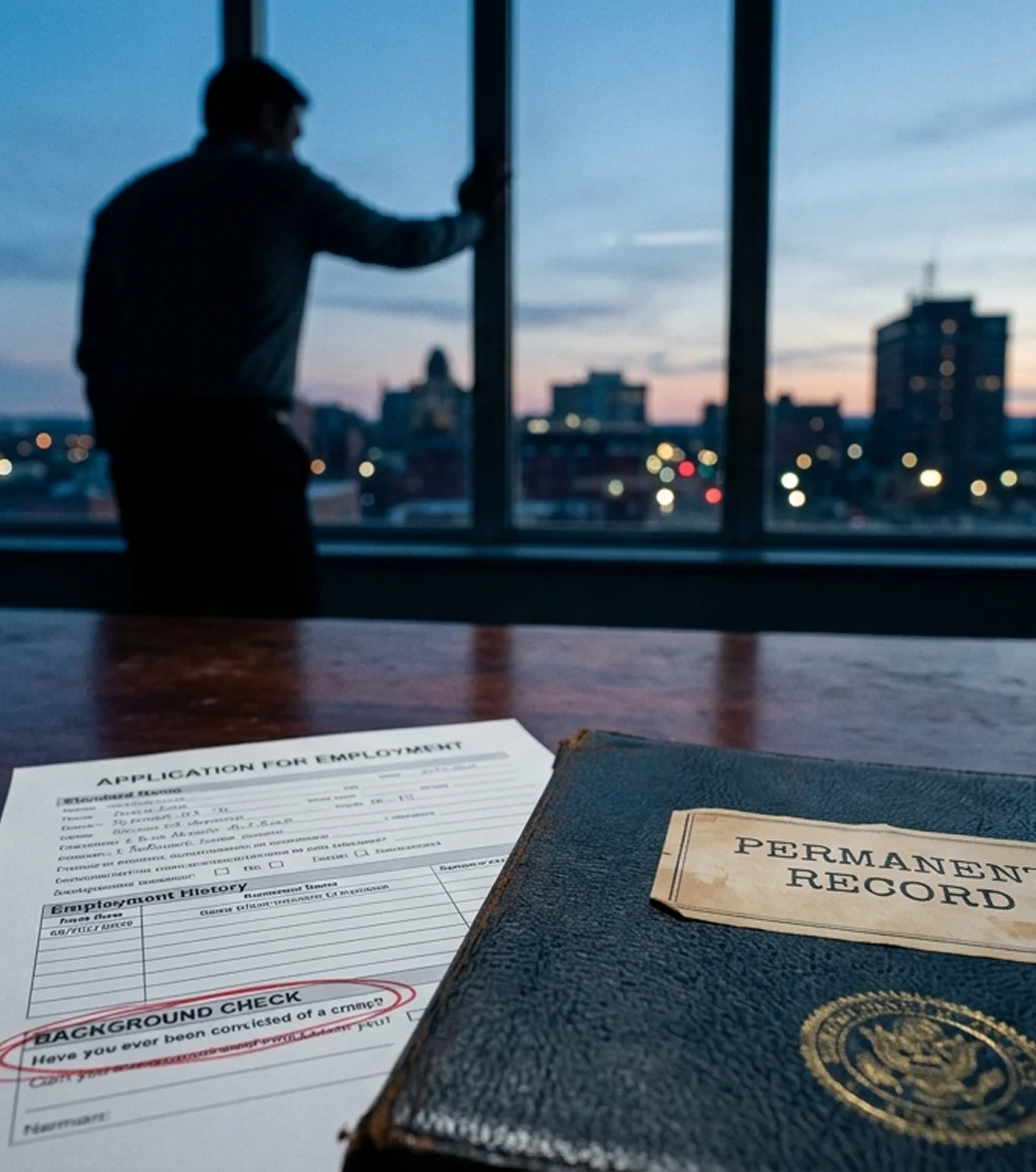
Sex offender registration.
Most Article 263 convictions require registration. Level 1 lasts 20 years; Levels 2 and 3 last for life, with limited relief (Correction Law §168-h). The level is set at a SORA hearing, and it can be fought. See SORA hearings and risk levels.
Where you live and work.
Probation or parole conditions can limit where you live, who you see and what jobs you can hold.
Internet and device limits.
Professional licenses.
Teachers, nurses, doctors, coaches and others may lose or be denied a license.
Immigration
For non-citizens, these charges can lead to deportation. Talk to us before any plea (8 U.S.C. §1101(a)(43)(I)).
Family court.
Firearms.
Travel.
Results From Our Attorneys
People v. Cohen
SORA risk level reduced from Level III to Level II.
Handled by Melissa K. Swartz. If you were already convicted, our criminal appeals team can review post-conviction options.
MEET THE TEAM
Meet Your Child Pornography Defense Lawyers
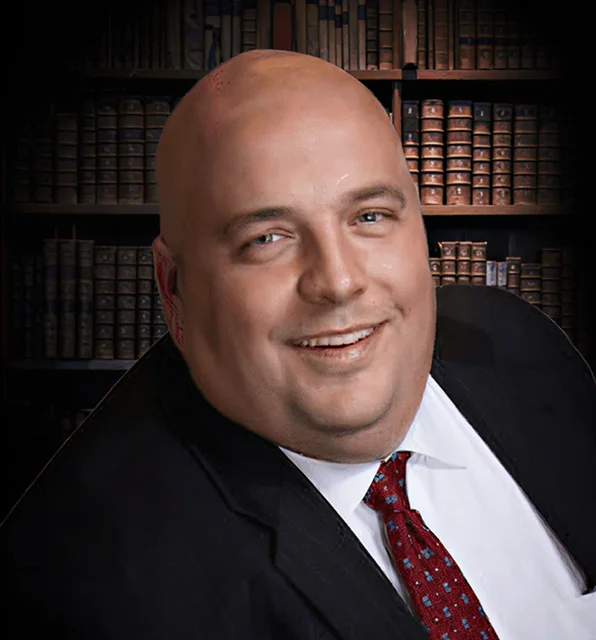
Scott A. Brenneck
Partner, Attorney
Former ADA, Felony Trial Unit

Steve Cambareri
Partner
Former ADA, violent felony trial bureau
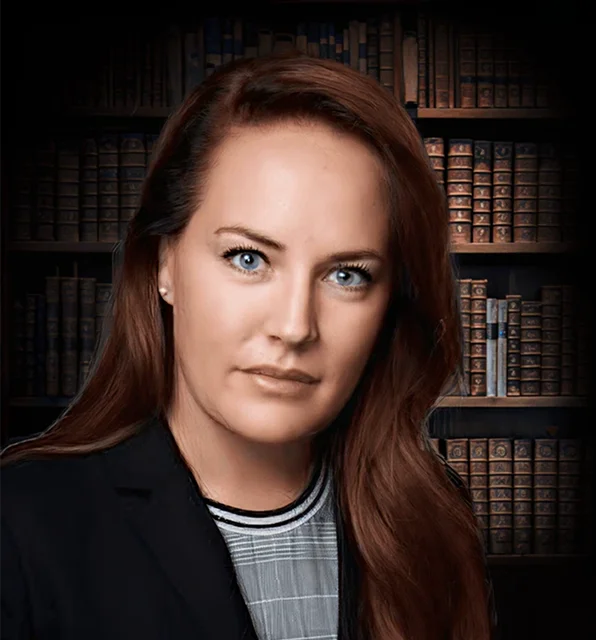
Melissa K. Swartz
Attorney
State and federal trial and post-conviction defense; NDNY CJA panel representative
Joe Centra, Esq.
Attorney
Former ADA, Law & Appeals bureau

(Ret.) Judge John
Special Counsel
Retired Appellate Division justice, now leading firm mediation.
WHY CHOOSE US
Why Choose Former Prosecutors for Your Child Pornography Defense
Former Onondaga County Prosecutors
We used to review these investigations for the prosecution. Now we use that insight to find the weak points.
State and Federal Court
We defend cases in Onondaga County Court and in federal court in Syracuse, and we know how the two systems differ.
Confidential From the First Call
Your consultation is private. We never discuss your case without your permission.
Free Consultation
Call 315-424-8326 or send a message. Bring the warrant or charging papers and we'll explain your options.
AREAS WE SERVE
Defending Clients in Syracuse & Central New York
Syracuse, NY
Onondaga County towns
Auburn (Cayuga County)
Oswego (Oswego County)
FAQS
Child Pornography Charges: Frequently Asked Questions
What is the difference between possessing and promoting child pornography in New York?
Can I be charged if I didn't know the files were on my device?
Can you go to jail for watching child pornography online without downloading it?
Will my case be in state or federal court in Syracuse?
What should I do if police come to my home with a search warrant?
Is there a mandatory minimum sentence for child pornography in New York?
Will I have to register as a sex offender?
How long do prosecutors have to bring child pornography charges?
Can a child pornography charge be reduced or dismissed?
Yes, in some cases. Charges can be dismissed if the search was unlawful, if knowledge can’t be proven, or if discovery rules were broken. Others are reduced through negotiation, which can lower the sentence or the SORA impact. No lawyer can promise a result, but a careful review of the warrant and forensics is where it starts.
How much does a child pornography attorney cost, and is the consultation confidential?
Reviewed by Melissa K. Swartz, former Onondaga County Assistant District Attorney and NDNY CJA panel representative. Last updated October 2026.
CONTACT US
Free Confidential Consultation
Phone Number
Locations