

Larceny & Theft Attorney in Syracuse, NY
A larceny attorney defends you when police say you stole property, from shoplifting to grand larceny. Cambareri & Brenneck, PLLC is a Syracuse, NY criminal defense firm founded by former Onondaga County prosecutors. Depending on the value and the proof, a theft charge may be dismissed, reduced or resolved without a criminal record. Call 315-424-8326 for a free consultation.
Message Your Team
IN THE NEWS






Syracuse Larceny Lawyers Who Used to Prosecute Theft Cases
In New York, the value of the property and how it was taken decide whether you face a misdemeanor or a felony.
New York doesn’t have a crime called “theft.” Stealing is charged as larceny under Penal Law Article 155. The law covers far more than shoplifting. Larceny includes taking property, tricking someone out of it, embezzling it, keeping lost property, writing a bad check, extortion, and, since recent changes, wage theft and deed theft.
The charge you face depends on:
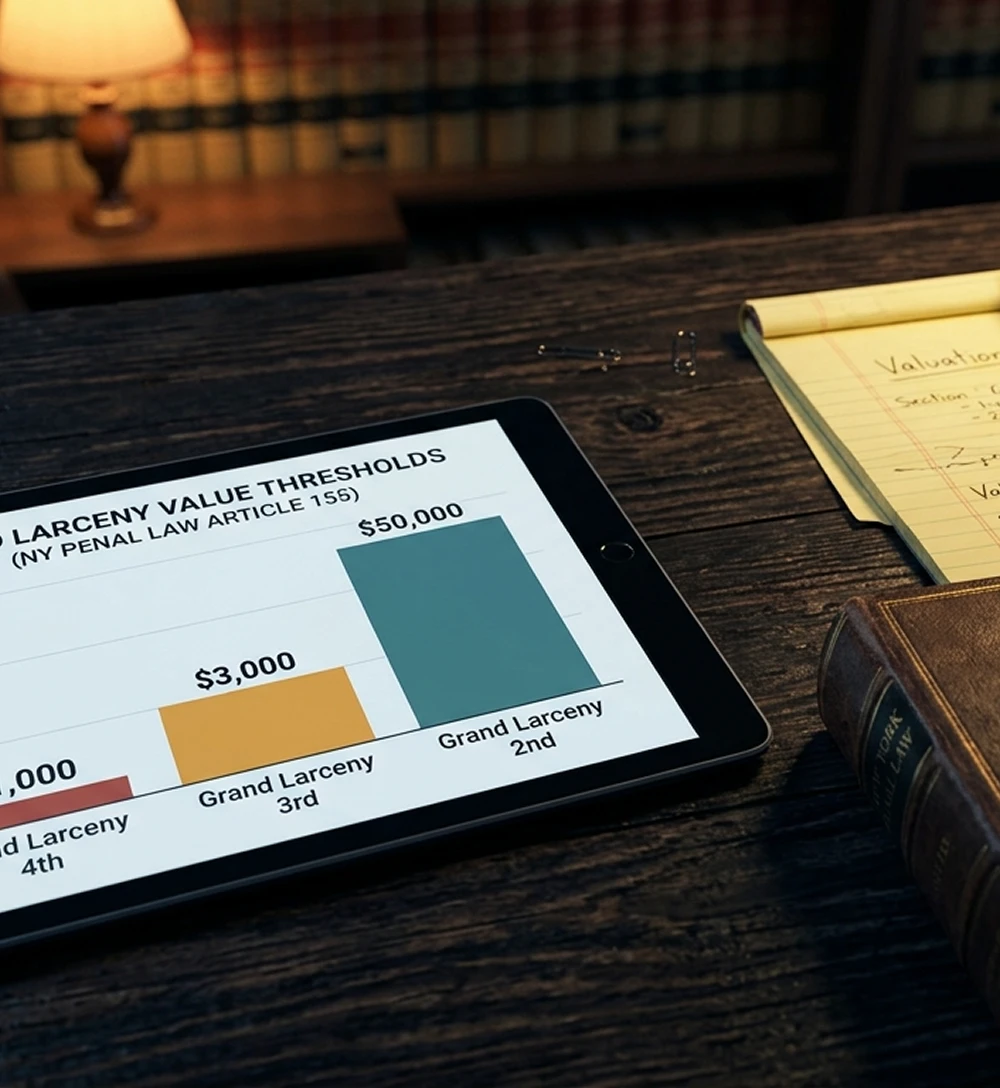
- The value. Property worth $1,000 or less is petit larceny, a misdemeanor. Once the value exceeds $1,000, it becomes grand larceny, a felony, and the degree climbs at $3,000, $50,000 and $1 million.
- The type of property. Some items make it a felony at any value: a credit or debit card, a firearm, or property taken directly from a person’s body.
- How it was taken. Extortion by threats of injury or property damage is a class C felony no matter the amount.
Our larceny lawyers know how these cases are built because they used to build them. Joe Centra spent about three years in the Onondaga County District Attorney’s Economic Fraud & Financial Crime Bureau, prosecuting grand larceny, embezzlement, falsified records and forgery. Steve Cambareri spent nearly nine years as an Onondaga County ADA and handles white-collar cases today, including theft, tax fraud and falsifying business records. Scott A. Brenneck tried felony cases in the Felony Trial Unit. We start where theft cases are won or lost: the value, the intent, and the proof that you were the person who took it.

Charged with larceny or shoplifting in Syracuse? Take these steps now
01
Don’t explain or apologize.
Not to police, store security, your employer or on social media. “I meant to pay,” “I’ll pay it back” or a written statement for loss prevention can be used to prove intent. (Read: why speaking to police without a lawyer is risky.)
02
Don’t sign anything from the store or your employer without advice.
03
Find your court date and charge.
04
Save your proof.
05
Call a larceny attorney before your first court date.
Early talks with the DA often decide whether a case is reduced, sealed or dismissed. Call 315-424-8326. (See also: what to do after a criminal arrest in Syracuse.)
What's the difference between petit larceny and grand larceny in New York?
The value of the property. Petit larceny is stealing property of any value, and it is a class A misdemeanor under PL §155.25. It becomes grand larceny in the fourth degree, a class E felony, when the value exceeds $1,000, or when the property is a credit or debit card, a firearm, a car worth more than $100, or is taken from a person’s body. Value means market value at the time and place of the theft, not the original price.
How much stolen money is a felony in New York?
Is theft the same as robbery or burglary?
No. Larceny is taking property without force. Robbery is stealing by using or threatening force (PL Article 160), and burglary is entering or staying in a building unlawfully to commit a crime (PL Article 140). Both carry much higher penalties. If you are charged with either, see our criminal defense attorney page.
If I pay it back, will the charge go away?
How Our Theft Defense Lawyers Fight Larceny Charges
The prosecutor must prove you took the property on purpose, meant to keep it from the owner, and that it was worth what they say. We test every step:
Intent. Forgetting to pay, a mix-up at self-checkout or a dispute over who owned something is not larceny. The People must prove intent to steal, not a mistake.
Claim of right. An honest belief that you had a right to the property is a defense under New York law. This matters in business, roommate and family disputes.
The value. The degree often turns on a few dollars over a line. We challenge sticker prices, used-item values and estimates, because the law uses market value.
Adding thefts together. Stores and employers often lump separate incidents into one felony. We test whether they were really one plan, as the aggregation rules require.
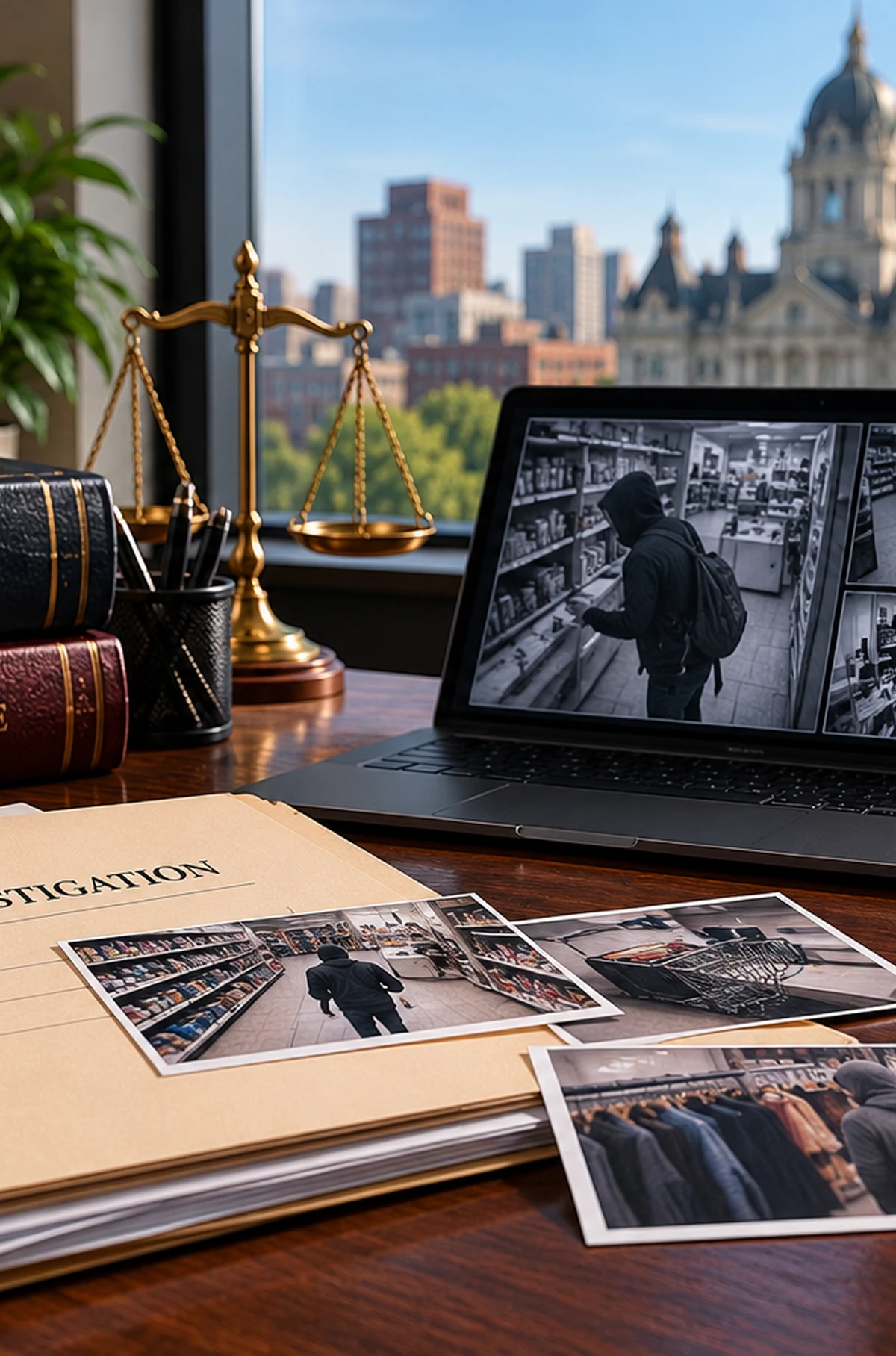
Identity and video. Store video is often grainy, partial or missing. We demand the full recording, not the clip loss prevention picked, and challenge shaky identifications.
Your statements. Admissions to store security, a manager or police may be suppressed if they were taken in custody without Miranda warnings
The search. If police searched your bag, car or phone without lawful grounds, we move to suppress what they found
The evidence the DA must share. Video, receipts, bank records, audit reports and witness statements must be turned over on a deadline. Missing evidence can lead to sanctions or dismissal.
Negotiation. When the proof is strong, we use restitution, your record and our prosecution experience to push for an ACD, a violation, or a misdemeanor instead of a felony.
Larceny Penalties in New York
These are the main theft charges, what can trigger each one, and the maximum sentence for a person with no prior felony. Judges can also impose probation, a conditional discharge, community service or restitution.
| Charge | Statute | Class | What can trigger it (examples) | Maximum sentence, first offense | Probation possible? |
|---|---|---|---|---|---|
| Petit larceny | PL §155.25 | A misdemeanor | Stealing property of any value ($1,000 or less), including most shoplifting | Up to 364 days in jail | Yes |
| Criminal possession of stolen property, 5th degree | PL §165.40 | A misdemeanor | Knowingly having stolen property of any value | Up to 364 days in jail | Yes |
| Grand larceny, 4th degree | PL §155.30 | E felony | Value over $1,000; credit or debit card; firearm; car worth over $100; taken from a person; retail goods over $1,000 in one plan | 1⅓ to 4 years in prison | Yes, or up to 1 year in jail |
| Criminal possession of stolen property, 4th degree | PL §165.45 | E felony | Stolen property over $1,000; a credit, debit or public benefit card; a firearm; a car over $100 | 1⅓ to 4 years | Yes, or up to 1 year in jail |
| Grand larceny, 3rd degree | PL §155.35 | D felony | Value over $3,000; an ATM or its contents; retail goods over $3,000 in one plan; deed theft of a commercial property | 2⅓ to 7 years | Yes, or up to 1 year in jail |
| Grand larceny, 2nd degree | PL §155.40 | C felony | Value over $50,000; extortion by fear of injury, property damage or abuse of public office; deed theft of a home | 5 to 15 years | Yes |
| Grand larceny, 1st degree | PL §155.42 | B felony | Value over $1 million | 8⅓ to 25 years | No — prison required |
Prison terms for these non-violent felonies are indeterminate (a minimum and a maximum); the ranges shown are the longest allowed for a first felony offense, and the minimum can be as low as one year. For class D and E felonies, a judge may impose a definite jail term of one year or less instead. Felony probation lasts 3 to 5 years, and misdemeanor probation up to 3 years. Fines can reach $5,000 for a felony and $1,000 for a class A misdemeanor, or double the amount gained. Courts usually order restitution of the loss. A prior felony raises the ranges. Sources: PL Article 155, PL Article 165, PL §70.00. This table is general information, not legal advice about your case.
Theft and Larceny Charges We Defend in Syracuse
Petit larceny
Grand larceny (fourth through first degree)
Embezzlement and employee theft
Fraud and white-collar theft
Obtaining property by false pretenses, false promise, bad checks, insurance or benefits fraud, and scheme to defraud are all charged in state court. As a white collar crime lawyer, Steve Cambareri handles tax fraud and falsifying business records cases. When the case involves the mail, wires, a bank or federal benefits, it may be charged in federal court instead; see our federal criminal defense page.
Identity theft and credit card theft
Criminal possession of stolen property
Retail theft rings and repeat shoplifting
Larceny by extortion, wage theft and deed theft
Got a letter from a store or your employer?
How a Larceny Case Moves Through Syracuse Courts
01
Arrest or ticket.
02
Appearance ticket or booking.
Most people charged with petit larceny or a class E felony get an appearance ticket and go home. Others are booked at the Onondaga County Justice Center, 555 South State Street. Most larceny charges are not bail-eligible, but there are exceptions.
03
Arraignment.
04
Early talks with the DA.
05
Grand jury.
06
Discovery and motions.
07
Plea, trial or sentencing.
07
Restitution and sealing.
Outside Onondaga County:
Shoplifting Lawyer for Destiny USA and Syracuse-Area Stores
Store detention.
Weeks later, many people get a letter asking for money. Under New York law, a store can seek the retail price of merchandise it didn’t get back in sellable condition (up to $1,500), plus a penalty of up to five times the price or $75, whichever is more, but never more than $500. This is a civil claim. Paying it does not end the criminal case, and not paying it does not create a new crime. Statements you make while trying to settle it can’t be used in the criminal case. Talk to a shoplifting attorney before you pay or reply.
Young people.
College students.
A shoplifting arrest can also trigger campus discipline at Syracuse University, SUNY Oswego, Le Moyne, OCC or SUNY ESF. See university discipline and Title IX.
First offense.
Collateral Consequences of a Larceny Conviction
If you are convicted, an appeal may still be possible. See our criminal appeals page.
A record that looks like dishonesty.
Students can face suspension or expulsion in addition to the criminal case. See university discipline and Title IX.
MEET THE TEAM
Meet Your Syracuse Theft Lawyers

Joe Centra, Esq.
Attorney

Steve Cambareri
Partner

Scott A. Brenneck
Partner, Attorney

Hon. John V. Centra (Ret.)
Special Counsel

Melissa K. Swartz
Attorney
WHY CHOOSE US
Why Hire Former Prosecutors as Your Theft Attorney
A Former Fraud Prosecutor on Your Side
Joe Centra prosecuted grand larceny and embezzlement in the Onondaga County DA's Economic Fraud & Financial Crime Bureau. He knows how these cases are charged, and where they're weak.
We Check the Numbers
The degree of a theft charge can turn on a few dollars. We test the value, the audit and every incident the DA adds together, not just the police report.
Protecting Your Record
For a first offense, our goal is often a result that keeps a conviction off your record. We'll tell you honestly what's realistic.
Free, Confidential Consultation
Call 315-424-8326 or send a message. Bring your appearance ticket and any letter from a store or employer.
AREAS WE SERVE
Theft Crime Lawyer for Syracuse & Central New York
Syracuse, NY
Onondaga County towns
Auburn (Cayuga County)
Oswego (Oswego County)
FAQS
Syracuse Larceny & Theft FAQs
What is the difference between petit larceny and grand larceny in New York?
Is shoplifting a felony in New York?
What happens for a first-time shoplifting or petit larceny charge in Syracuse?
Do I have to pay a store's civil demand letter?
What are the degrees of grand larceny in New York?
Can a larceny charge be dropped if I pay the money back?
Will I go to jail for grand larceny in New York?
How much does a larceny attorney cost in Syracuse?
It depends on the charge and the work involved. A petit larceny case usually costs less than a grand larceny or embezzlement case that needs audits, hearings or a trial. Ask any lawyer for a clear fee agreement in writing. Cambareri & Brenneck offers a free consultation, so you can learn your options before you decide. Call 315-424-8326
Can a larceny conviction be sealed in New York?
Which court will hear my larceny case in Onondaga County?
Reviewed by Joe Centra, former Onondaga County Assistant District Attorney (Economic Fraud & Financial Crime Bureau). Last updated October 2026.
CONTACT US
Free Confidential Consultation Larceny attorney
Charged with larceny, theft or shoplifting? Tell us briefly what you’re charged with and when your next court date is. A member of our team will get back to you quickly. You can also call 315-424-8326.
Phone Number
Locations