

DWI Attorney in Syracuse, NY
Message Your Team
IN THE NEWS






Syracuse DWI Defense Attorneys Who Used to Prosecute DWI Cases
Most people charged with DWI have never been arrested before. You have more options than a guilty plea.
In New York, DWI means driving with a blood alcohol content (BAC) of 0.08% or more, or driving while intoxicated based on how you looked and acted, under Vehicle and Traffic Law §1192(2) and (3) . A first offense is a misdemeanor. It can bring up to a year in jail, a fine, a license revocation and an ignition interlock on every car you drive.
A DWI arrest starts two cases at once. The criminal case decides whether you are convicted. A separate license case, run by the court and the DMV, can take your license at your very first court appearance. Both need attention from day one.
Cambareri & Brenneck is made up of former Onondaga County prosecutors. Steve Cambareri focuses his practice on DWI defense. He teaches continuing legal education on DWI and the Vehicle and Traffic Law for the Onondaga County Bar Association, and he has lectured to the Syracuse Police Department, the Onondaga County Sheriff’s Office and the Center for Forensic Sciences. He knows how the officers on your case were trained, and where their procedures break down. Scott A. Brenneck worked DWI cases as a prosecutor and now defends them. As your DWI defense attorneys, we use what we learned on the other side to test every step of the case against you.
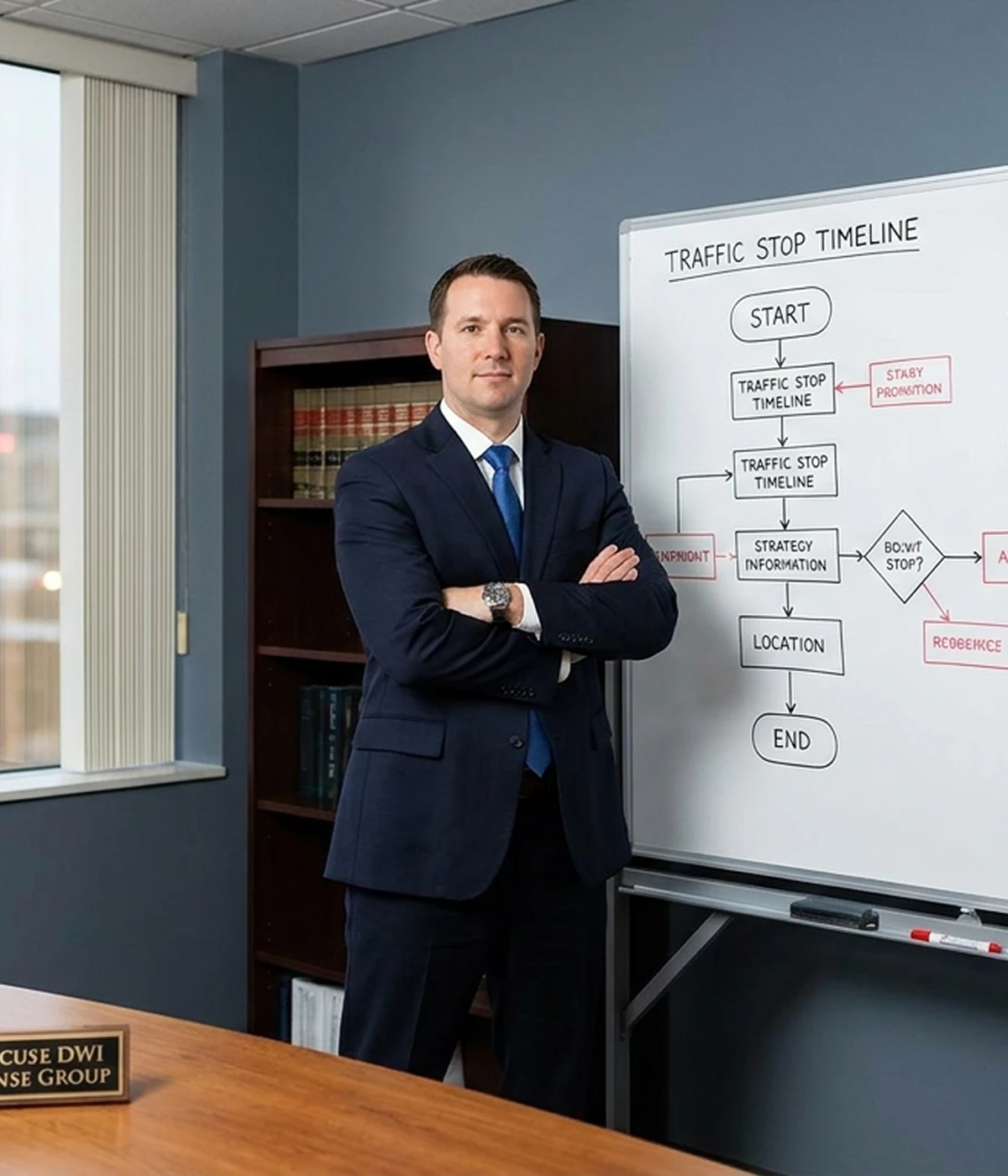
Arrested for DWI in Syracuse? Do these five things now
01
Read your paperwork
Find your court date and the court’s name on the appearance ticket or release papers. Missing it can lead to a warrant and a license suspension.
02
Don’t talk about the case
Don’t explain, apologize or post about it. What you say to police, friends or on social media can be used against you. (Read more: why speaking to police without a lawyer is risky.)
03
Write down what happened
Note where you were, what you drank and when, where you were stopped, which tests you took and what the officer said. Do it today, while you remember.
04
Keep your receipts and records
05
Call a DWI attorney before your first court date.
The court can suspend your license at arraignment, and a refusal hearing at the DMV comes fast. Call 315-424-8326. (See also: what to do after a criminal arrest in Syracuse.)
DUI or DWI in Syracuse: which is it?
New York law does not use the term “DUI.” The charges are DWI (driving while intoxicated) and DWAI (driving while ability impaired). Many people search for a Syracuse DUI lawyer, and that is fine. The ticket will say DWI or DWAI, and the penalties are very different. A first DWAI by alcohol is a traffic infraction, not a crime. If you were charged with DWAI, see our DWAI defense page. For a plain-English overview, read what a DUI is in New York.
Do I have to take a breath test in New York?
What if I wasn't read my Miranda rights?
Will I lose my license before my case is over?
How Our DWI Defense Attorneys Challenge the Charge
The stop. Police need a lawful reason to pull you over. If they didn’t have one, the judge can suppress everything that followed, including the breath tes.
Field sobriety tests. The walk-and-turn, one-leg stand and eye (HGN) tests must be given and scored the way officers are trained. Weather, footwear, injuries and the roadside surface all affect the results.
The breath test. We review the instrument’s calibration and maintenance records, the operator’s certification and the required observation period before the test.
The two-hour rule. Chemical test results are generally admissible under the implied consent law only if the test was given within two hours of arrest, unless you agreed or a court ordered it.
Refusal warnings. A refusal can be used against you only if police warned you clearly and in plain language, and you kept refusing.
Operation of the vehicle. The People must prove you drove or “operated” the car. Sleeping in a parked car with the engine off is a different case from driving down Erie Boulevard.
Your statements.We check whether police questioned you in custody without Miranda warnings, or delayed your request to speak with a lawyer before the test.
The evidence the DA must share. Under New York’s discovery law, prosecutors must turn over body-camera and dash-camera video, test records and officer notes on a deadline. Missing evidence can lead to dismissal or other sanctions.
DWI Penalties in New York
| Offense | Statute | Level | Fine | Max jail or prison | License (minimum) |
|---|---|---|---|---|---|
| DWAI — alcohol (common reduced charge) | VTL §1192(1) | Traffic infraction | 300–500 | 15 days | 90-day suspension |
| DWI — first offense | VTL §1192(2), (3) | Misdemeanor | 500–1,000 | 1 year | 6-month revocation |
| Aggravated DWI (0.18% BAC or more) — first offense | VTL §1192(2-a)(a) | Misdemeanor | 1,000–2,500 | 1 year | 1-year revocation |
| Leandra's Law (child 15 or younger in the car) | VTL §1192(2-a)(b) | Class E felony | 1,000–5,000 | 4 years | Revocation; interlock required |
| Second DWI within 10 years | VTL §1193(1)(c)(i) | Class E felony | 1,000–5,000 | 4 years | 1-year revocation (18 months if aggravated) |
| Third DWI within 10 years | VTL §1193(1)(c)(ii) | Class D felony | 2,000–10,000 | 7 years | 1-year revocation; may be permanent |
| Chemical test refusal (DMV, civil) | VTL §1194(2)(d) | Civil (DMV) | $500 civil penalty | — | 1-year revocation |
Ignition interlock: anyone convicted of DWI must install one in every vehicle they own or operate for at least 12 months, which can end after 6 months with proof of installation. A second DWI within 5 years adds a mandatory 5 days in jail or 30 days of community service. Felony prison terms come from Penal Law §70.00. New DMV point rules took effect in February 2026 (syracuse.com coverage) . Sources: VTL §1193, VTL §1194. This table is general information, not legal advice about your case
Types of DWI Charges We Defend in Syracuse
First-offense DWI
Aggravated DWI (0.18% BAC or higher)
Leandra's Law (child passenger)
Felony DWI in Syracuse (second or third offense)
Chemical test refusal
Commercial driver (CDL) DWI
Drivers under 21
Under New York’s zero tolerance law, a driver under 21 with a BAC of 0.02% to 0.07% faces a DMV finding and a six-month suspension. A DWI conviction under 21 means at least a one-year revocation. Students at Syracuse University, SUNY Oswego, Le Moyne or OCC may also face campus discipline; see our university discipline and Title IX page
DWI crashes, injuries and vehicular assault
When a DWI crash causes serious injury or death, prosecutors can add felony charges such as vehicular assault or vehicular manslaughter. These cases need an accident reconstruction review early. See our felony and misdemeanor defense page for how felony cases move through Onondaga County Court.
Out-of-state drivers
First court date coming up?
How a DWI Case Moves Through Syracuse Courts
01
Arrest and testing.
02
Release and appearance ticket.
03
Arraignment
04
DMV refusal hearing (if you refused)
05
Discovery
06
Motions and hearings
07
Plea or trial
08
Sentencing and the DMV.
Your license: the second case
- Suspension pending prosecution at arraignment if a test showed 0.08% or more
- Hardship privilege if you prove you can’t get to work, school or medical care another way; the court can’t delay arraignment more than three business days for that hearing.
- Conditional license (NY) after 30 days of suspension, for work, school, medical and similar trips.
- Refusal revocation of at least one year if the DMV finds a valid refusal.
Outside Onondaga County
Collateral Consequences of a DWI Conviction

Your job.
CDL and professional licenses.
Driver Responsibility Assessment
Insurance.
Immigration
Pistol permits
Future DWIs
MEET THE TEAM
Meet Your Syracuse DWI Defense Team
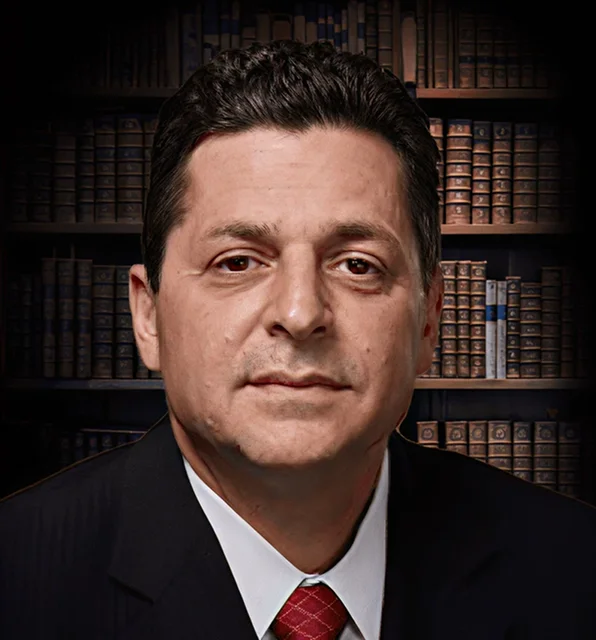
Steve Cambareri
Partner
Former ADA, violent felony trial bureau
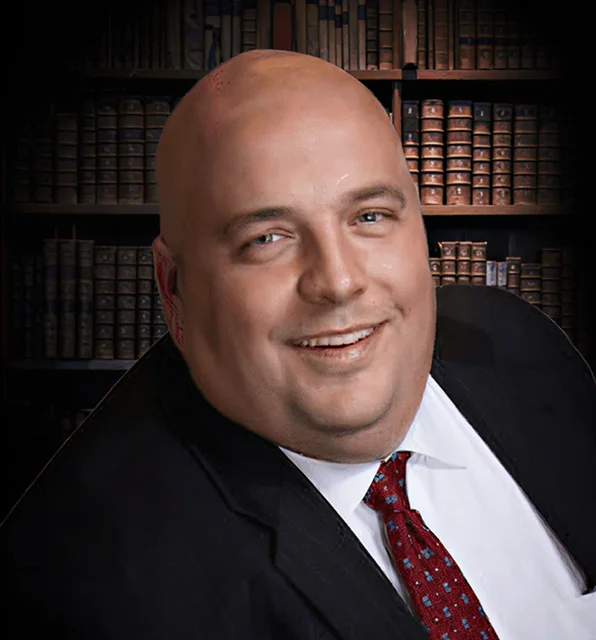
Scott A. Brenneck
Partner, Attorney
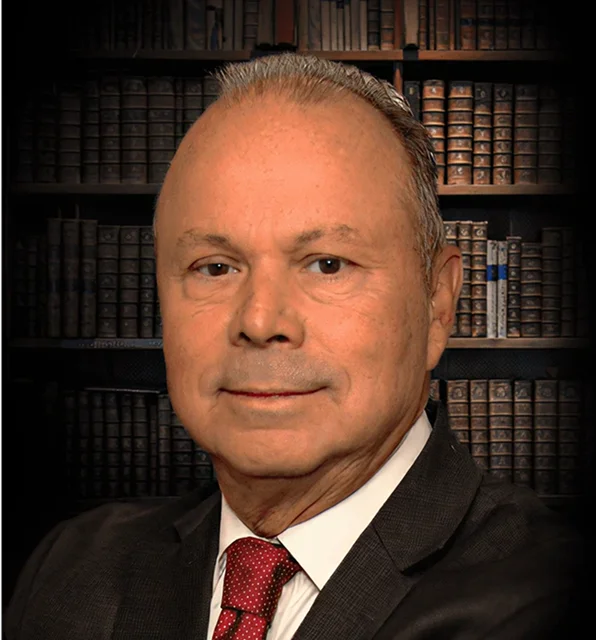
(Ret.) Judge John
Special Counsel
Retired Appellate Division justice, now leading firm mediation.
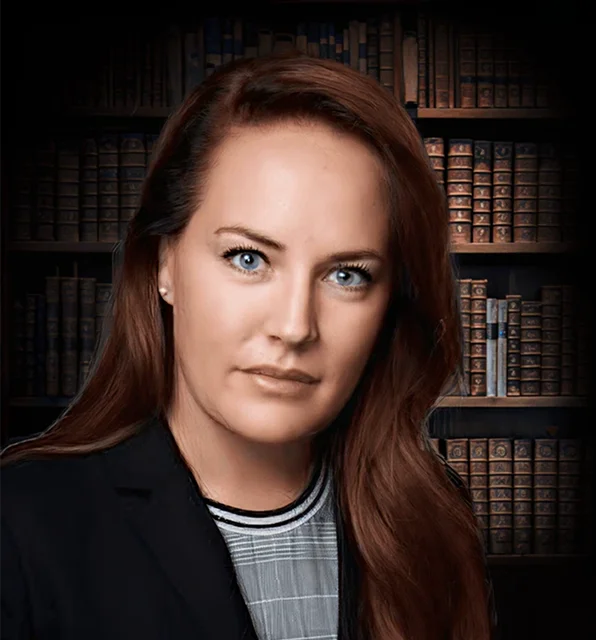
Melissa K. Swartz
Attorney
Joe Centra, Esq.
Attorney
WHY CHOOSE US
Why Hire Former Prosecutors as Your DWI Lawyer
Former Onondaga County Prosecutors
We used to build DWI cases for the People. Now we use that insight to find the weak points in yours
We Teach DWI Law
Steve Cambareri lectures on DWI and the Vehicle and Traffic Law for the Onondaga County Bar Association
Court and DMV, Handled Together
We work the criminal case and the license case at the same time, from your first call.
Free, Confidential Consultation
Call 315-424-8326 or send a message. Bring your ticket and we'll explain your options.
AREAS WE SERVE
DWI Defense for Syracuse & Central New York
Syracuse, NY
Onondaga County towns
Auburn (Cayuga County)
Oswego (Oswego County)
FAQS
Syracuse DWI & DUI FAQs
Do I need a DWI attorney for a first offense in New York?
Yes, in most cases. A first DWI is a misdemeanor that carries up to a year in jail, a fine of $500 to $1,000, at least a six-month license revocation and an ignition interlock. A DWI attorney can challenge the stop and the test, protect your license at arraignment, and push for a reduction to a non-criminal DWAI
How much does a DWI lawyer cost in Syracuse?
It depends on the charge and how much work the case needs. A first-offense misdemeanor usually costs less than a felony, refusal or aggravated case that needs hearings or a trial. Cambareri & Brenneck offers a free consultation, and we explain the fee before you decide anything. Call 315-424-8326.
Can a DWI be dismissed or reduced in New York?
Is a DWI a felony in New York?
Will I lose my license after a DWI arrest in Syracuse?
What happens if I refused the breathalyzer?
What is the difference between DWI and DUI in New York?
Will I go to jail for a first DWI in New York?
How long does a DWI stay on your record in New York?
Which court will hear my DWI case in Onondaga County?
Reviewed by Steve Cambareri, former Onondaga County Assistant District Attorney and OCBA lecturer on DWI and the Vehicle and Traffic Law. Last updated October 2026.
CONTACT US
Free Confidential Consultation
Phone Number
Locations